

21.2.2026
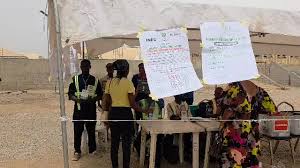
The 2026 Federal Capital Area Council elections held Saturday has been marred by vote buying, low turnout of voters and heavy deployment of security agents.
This formed the central report of the civil society group Yiaga Africa after the close of the elections. According to Yiagia. vote buying was witnessed in several polling units of the elections conducted by the Independent National Electoral Commission.
Candidates of the various parties vied for positions in six area council chairmanship positions and 62 councillorship seats of the FCT.
On its preliminary findings, the election watch agency said: “Yiaga Africa observers reported a delayed commencement of polling in several polling units, primarily attributable to logistical inefficiencies and, in some instances, election security–related challenges.
“As of 9:00 a.m., set-up activities were still ongoing in the majority of polling units observed, indicating that essential preparatory procedures had not been completed within the timeframe prescribed by electoral guidelines.
“In the Abuja Municipal Area Council (AMAC), particularly in Wuse and Gwarinpa wards, several polling units opened significantly behind schedule. Observers noted that polling officials were still arranging materials and organizing the voting environment as at 9:00 a.m., with accreditation and voting commencing only after 10:00 a.m. On average, across the sampled polling units observed, accreditation and voting began at approximately 10:00 a.m.
“Consistent with the Commission’s guidelines, critical election materials including the Bimodal Voter Accreditation System (BVAS) devices and the voter register—were deployed in the polling units observed.
“However, in Polling Unit 004, Wuse Ward, Zone 2 Primary School, the voter register was not initially available and was only produced after observers raised concerns and voters objected. In addition, essential voting materials were absent in certain locations. Voting cubicles were not observed in PU002 (Ward 09), PU006 (Ward 01), and PU012 (Ward 10) in Abaji
“Observers reported instances in which voters were reassigned to newly created polling units without prior or adequate notification. While Yiaga Africa acknowledges INEC’s efforts to notify affected voters via SMS, many of these messages were delivered on Election Day, with some received hours after polling had already commenced. The lack of timely and effective communication generated confusion at several polling locations, as numerous voters spent over an hour attempting to ascertain their designated polling units.
“In multiple instances, this administrative shortcoming contributed to congestion and
overcrowding, thereby undermining orderly queue management and potentially
discouraging voter participation.
“The observation further revealed significant disparities in voter distribution within the same polling locations. Such pronounced imbalances raise serious concerns regarding the coherence, and reliability of the Commission’s polling unit expansion and voter redistribution framework.
“Closing of Polling Unit before the official 2:30pm: Observers reported some polling
units closing the polling process before the official 2:30pm close time. While some polling units experienced poor voter participation, the guideline requires the polling unit to remain open until 2:30pm or the last person on the queue votes.
“Security Deployment and Observer Access: Yiaga Africa observed heavy security deployment in certain locations, which, in some instances, impeded the movement of accredited election observers and restricted access to polling units. Observers further noted that the heightened security presence created barriers for citizens attempting to access polling units to exercise their right to vote.
“Vote buying: The persistent menace of vote buying once again manifested during the election. Yiaga Africa observers documented incidents of vote buying at polling units, underscoring the continued vulnerability of the electoral process to monetary inducement.
“Despite prior assurances and directives issued by INEC to security agencies to identify and apprehend both vote buyers and sellers, these illicit practices reportedly continued in several locations.”