

22.2.2026
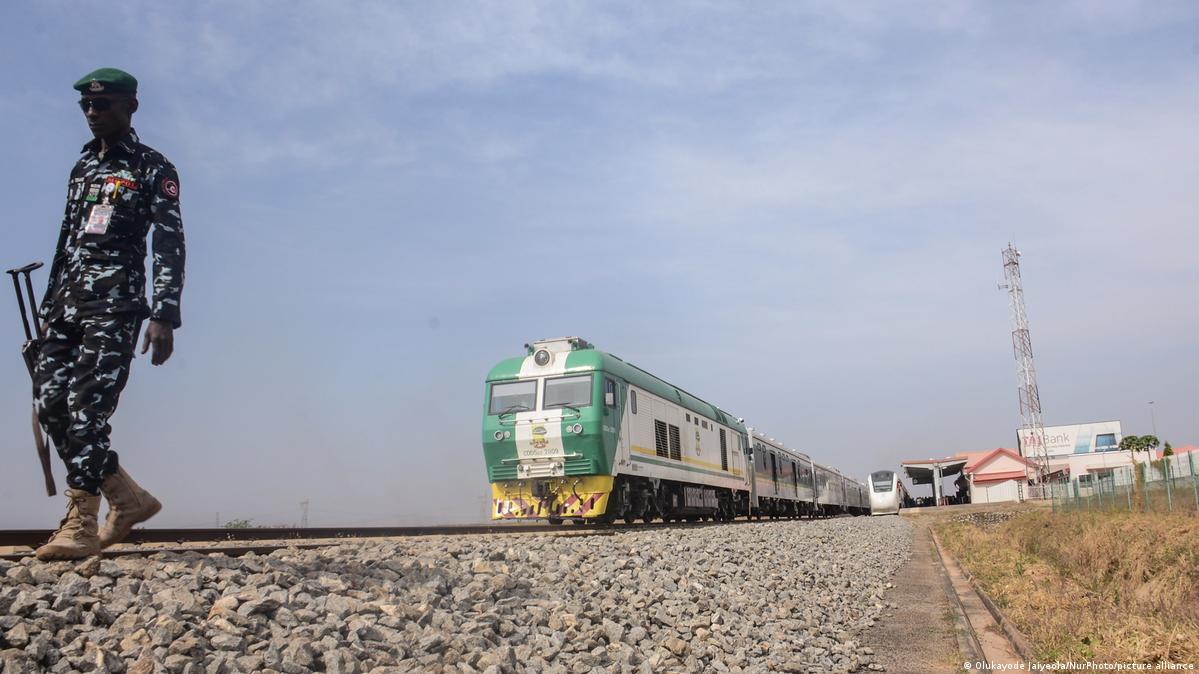
Passengers using the Abuja-Kaduna corridor have called on the Nigeria Railway Corporation to improve on its services to boost more patronage and comfort during the trips.
Some of the users spoke of hardships experienced on the corridor, these include alleged ticket racketeering and overbooking to operational and mechanical failures.
In interview conducted by the News Agency of Nigeria, the passengers expressed disappointment that the service, meant to be a safer alternative to the reported insecurity on the Abuja-Kaduna highways, has turned into a gruelling ordeal.
“A regular passenger on the service told me that purchasing tickets online is a big challenge because the site is down most of the time, and when you are lucky enough to log in, the tickets are already fully booked,” Mr Solomon Abiona one of the passengers said.
“He sent me the number of one of the racketeers, an NRC official, who assured me of tickets upon payment of N6,000 per ticket instead of the official fare of N3,600.
“Eventually, the six of us were issued tickets that were not in our names,” he said.
He added that on the day of departure, an official was already on standby at the Kubwa station to facilitate their entry and escort them to the coach.
Abiona narrated that the return journey from Kaduna to Abuja was even worse as they were issued tickets without seat numbers and were instructed to board and occupy any available seat.
“When the passengers whose names were on the seats we occupied eventually located their seats, we had no choice but to join others standing in the aisle for over three hours.”
Tickets were sold to Abiona and his companions with different names and without seat numbers.
Another passenger, Ibrahim Bulus, described the situation as more chaotic on weekends due to the high influx of travellers.
He attributed the overcrowding to the reduction in daily train services from six trips (three departures and three arrivals) to just two.
Bulus urged the NRC’s management to step up operations and increase daily trips to meet the growing demand along the corridor.
Beyond ticketing and overcrowding, passengers also reported alarming mechanical issues during the journey.
They claimed that the train engine malfunctioned repeatedly and overheated to the extent that attendants were seen pouring buckets of water on it.
The passenger added that, each time this happened, the cooling system and lighting in the coaches would shut down, causing the train to slow significantly.
Chief John Fabunmi, a first-time passenger on the service, said he was deeply disappointed and frightened by the experience.
“At this stage of our development, and with the way God has blessed this country, how can we subject Nigerians to such harrowing experiences on a train service that I once considered a major democratic dividend?
“We were more than one hundred people standing in the coaches. When I could no longer bear the pain, I had to sit on my luggage in the rear coach.
“I was shocked to see officials carrying buckets of water and pouring it on the engine because it was overheating.
“Each time this happened, the cooling system and the lights in the coaches would go off, and the locomotive would crawl at a snail’s pace,” he said.
Fabunmi added: ‘Out of curiosity, I asked one of the officials if a train could be switched off while in motion and jump-started while approaching hilly terrain, the way some commercial drivers do to conserve fuel, but I got no response.
“I feared that, at such a slow speed, we could easily be attacked and face an even deadlier situation than what we were trying to avoid on the road.
“This was my first experience on the service, and I have vowed not to use the train again until there are improvements”.
Mr Wusi Lawrence, another passenger, lamented that the Abuja–Kaduna railway, a standard-gauge service, was not significantly different from the narrow-gauge rail services of the 1980s.
He noted that the service pales in comparison to rail systems in developed countries and even in some African nations such as South Africa and Kenya.
“It is unfortunate that while many countries are talking about high-speed trains moving at 360 kilometres per hour with top-class comfort and hospitality services, we are still this far behind.
“I really do not know what we will get right in this country,” he said.
For many of the commuters, the Abuja–Kaduna rail line was expected to represent progress, a safer and more efficient transportation alternative.
Instead, their testimonies reveal a service struggling with overcrowding, alleged corruption, mechanical challenges and deep public dissatisfaction.
Responding to the development, Mr Abubakar Bunma, Personal Assistant on Media to the NRC Managing Director, Kayode Opeifa, said there was no provision in the corporation’s operations for issuing a ticket without a seat number.
He explained that tickets are booked and paid for online, with an automatically generated number that captures the passenger’s name, National Identification Number (NIN), and phone number.
“If your name and your NIN do not match, you cannot even get a ticket,” he said.
Bunma acknowledged that there may be instances of failed bookings in which passengers were debited.
In such cases, he said, affected passengers who show up at the station may have their trips rescheduled.
“Those who insist on travelling could be given the option to stand, but only if no seats are available,” he said.
Clarifying reports about overheating, he said it was not the locomotive engine that was being cooled with water, but the power car that supplies electricity for onboard services.
“If the engine is off, the train will not move. That is what people do not understand.
“The power car, which powers the air conditioning, lights, and toilets, has a generator inside the coach.
“There was a time we had issues; it overheated. They turned it off, poured water on it, and then turned it back on,” he said.
He also stressed that the NRC does not permit passengers to stand for long-distance journeys.
“Let me tell you, sometimes because of the very cold air from the AC, some passengers prefer to stand in the corridor.
“We do not allow passengers to stand. If anyone is standing, it is either a staff member, security personnel, a cleaner, or a medical official,” he explained.
Bunma insisted the train could not be overbooked, since tickets are sold strictly in accordance with the train’s capacity.
Regarding the extended travel time, he explained that, following the accident on August 16, 2025, the journey duration was increased from 2.5 hours to 3 hours for safety reasons.
He added that management had concluded plans to increase daily trips along the corridor from one to three or four to accommodate passengers on the busy route.
He recalled that the 2025 accident was also the major reason daily trips were reduced from three to one.
While the NRC has refuted claims of overbooking and clarified reports of overheating, commuters’ lived experiences reveal deep frustration and eroding public confidence.
The disturbing testimonies from passengers also suggest a widening gap between expectation and reality.
As demand along the corridor continues to grow, stakeholders say the focus must shift from damage control to tangible reforms.
They demand improved ticketing systems, increased daily trips, strict monitoring of staff conduct, and enhanced maintenance protocols.
Until these visible improvements are made, the Abuja-Kaduna rail line risks losing the very public trust it was meant to restore. NAN