

20-6-2025
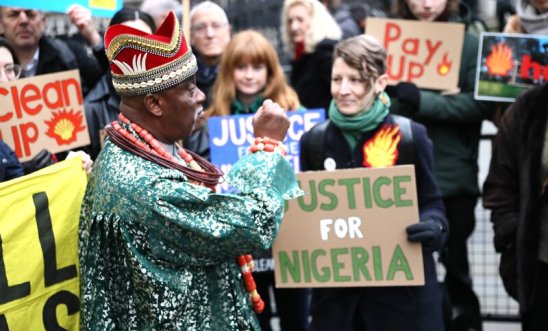
Shell Plc and its former Nigerian subsidiary can be held responsible for decades of oil spill in Bille and Ogale communities in Ogoni Rivers State.
After many years of hearing a UK Court made the ruling saying the oil giant is liable for a legacy oil pollution in Nigeria. During the preliminary hearing, which started in March 2025, Shell had argued that Oil spilling in the community was due to illegal tampering of pipelines by oil thieves.
But in her judgement Friday presiding judge Mrs Justice May submitted that Shell failed its moral obligations to clean up and must now face a full trial in London’s High Court in 2027.
The legal action is led by the claimant law firm Leigh Day, which began legal action in 2015.
The claim contains allegations that years of chronic oil spills have left the communities, which have a combined population of 50,000, without access to clean water, unable to farm and fish, and with a serious ongoing risk to public health.
The case has been through several courts, including the High Court in 2017 and the Court of Appeal in 2018. Both courts ruled that there was no arguable case that Shell owed the claimants a duty of care.
Shell argued that there was a strict five-year limitation period. However, the judge, in her 102-page judgment, rejected the argument and left it open for the communities to claim compensation for oil spills that occurred more than five years ago.
Leigh Day partner Matthew Renshaw said: “Shell’s attempts to knock out or restrict these claims through a preliminary trial of Nigerian law issues have been comprehensively rebuffed.”
“This outcome opens the door to Shell being held responsible for their legacy pollution as well as their negligence in failing to take reasonable steps to prevent pollution from oil theft or local refining,” he added.
A spokesperson for Shell said the company welcomed this judgement.
“For many years, the vast majority of spills in the Niger Delta have been caused by third parties acting unlawfully, such as oil thieves who drill holes in pipelines, or saboteurs.”