

28-7-2025
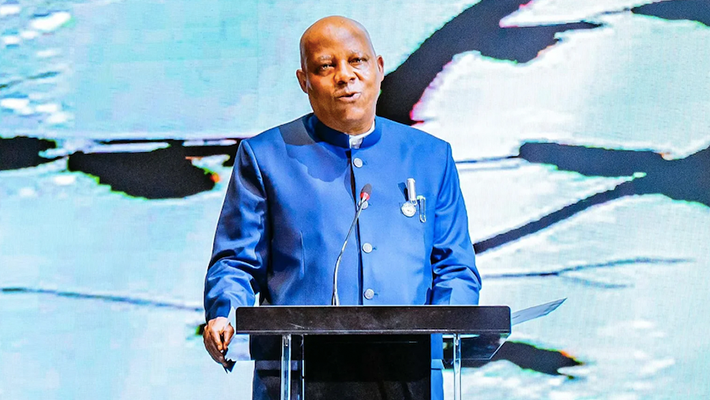
Vice President Kashim Shettima said Nigeria is deploying Artificial Intelligence (AI) and other modern technologies to monitor food production, enhance transparency, connect producers to markets, and reduce waste across the agricultural value chain.
”Artificial intelligence, geospatial analytics, and satellite-driven climate intelligence are now part of our agricultural vocabulary,” said Mr Shettima.
”We are deploying these tools to monitor production, enhance transparency, connect producers to markets, and reduce waste across the value chain.”
VP Shettima spoke at the opening session of the United Nations Food Systems Summit Stocktake (UNFSS+4) in Addis Ababa on Monday.
The summit will build on the momentum of the 2021 UN Food Systems Summit and the first Stocktake in 2023 (UNFSS+2), focusing on accelerating sustainable, inclusive, and resilient food systems transformation.
The Vice President said food and nutrition are now central pillars of both the National Development Plan 2021-2025 and the Nigeria Agenda 2050.
He stated that food insecurity was no longer a shadow lurking in distant lands, adding, “It is a shared affliction; whether you live by the banks of the Niger or the banks of the Tiber, you will find the same truth.”
”Our faith in the capacity of our people remains unshaken. In partnership with the African Development Bank and IFAD, we are investing in Special Agro-Industrial Processing Zones. These hubs are not just places of production. They are engines of transformation,” the vice president said.
Mr Shettima said Nigeria had scaled up investments in school feeding programmes, nutrition-sensitive agriculture, and community-driven nutrition education.
Speaking at the occasion, Ethiopian Prime Minister Abiy Ahmed, said the event was a moment to take stock and to renew shared commitment to building food systems that are resilient, inclusive, and just.
”Globally, food systems are facing immense pressure from planning stock, shocks, conflicts, inequalities, and economic destruction. At the same time, development assistance has declined in multilateral cooperation.”
Mr Ahmed said the challenges had threatened production, supply, and dignity in the subregion nations.
The secretary-general of the United Nations, António Guterres, who spoke in a recorded video, said food systems were about more than food, adding, “They include climate, justice, and the right to a better future.
”Since the last food summit, we have seen progress. We are committed to food systems that are inclusive, sustainable, equitable, resilient, and built on human rights, but progress is not fair enough.
”Global hunger is rising; threats and shocks are pushing up the prices of food. The Gross Domestic Product (GDP) of the African continent is not just a crisis of scarcity; it is a crisis of justice, equity, and climate.”
Others who spoke were the prime minister of Italy, Giorgia Meloni, Kenyan President William Ruto, and other heads of state and representatives from multilateral organisations. NAN