

19.9.2025
United Nations Committee on the Elimination of Discrimination against Women has revealed that 91 Chibok schoolgirls remain in captivity or are still missing, 11 years after their abduction.
CEDAW also reported that many survivors continue to endure trauma and social stigma, with little to no access to adequate support services.
The findings were published in an inquiry report following a two-week confidential mission to Nigeria in December 2023.
During the visit, the CEDAW delegation conducted assessments in Abuja as well as in several states, including Adamawa, Borno, Enugu, and Kaduna.
“The committee finds grave and systematic violations persist after Chibok mass abduction of schoolgirls,” the report said. “Nigeria is responsible for grave and systematic violations of women’s and girls’ rights amid multiple mass abductions.”
The experts said urgent measures were needed to end torture and ill-treatment.
According to school staff, they were the first UN delegation to have visited Chibok Government Secondary School since the mass abduction in 2014.
In Abuja, they met with the director of the Women Development Department and the Director of Defence and Security.
The committee also met with officials from the National Agency for the Prohibition of Trafficking in Persons and representatives from the Nigerian Armed Forces and the Police Service Commission.
The delegation visited an internally displaced persons camp in Abuja, where they interviewed victims of abductions by Boko Haram, as well as women and girls who had been abducted for ransom by other groups.
The initial focus of the committee’s inquiry was on the mass abduction carried out by Boko Haram in 2014, when 276 schoolgirls were taken from Chibok Secondary School in Borno. Of that number, 82 managed to escape on their own, while 103 were released in small groups between 2016 and 2017 through prisoner exchanges. At least 91 of the Chibok girls remain in captivity, or their whereabouts are still unknown.
However, the scope of the CEDAW inquiry extended beyond the Chibok case, encompassing abductions carried out by other armed groups in subsequent years, including those committed for ransom.
Nahla Haidar, chair of the committee, said, “The abduction of the Chibok girls was not an isolated tragedy but part of a series of mass abductions targeting schools and communities across northern Nigeria. Though it was the first publicised case to gain global support. While such attacks had started earlier, Chibok marked the beginning of increased international attention of a decade-long pattern of mass abduction.”
Ms Haidar added at least 1,400 students had been kidnapped from schools since the Chibok abduction.
“These girls were often taken for ransom, forced marriage, trafficking and prisoner exchange. The Committee considered that the state party’s repeated failure to protect schoolgirls and other women and girls from abductions amounts to systematic and grave violations,” she added NAN
11 years after 91 Chibok girls nowhere to be found, UN knocks Nigeria for violations of women rights
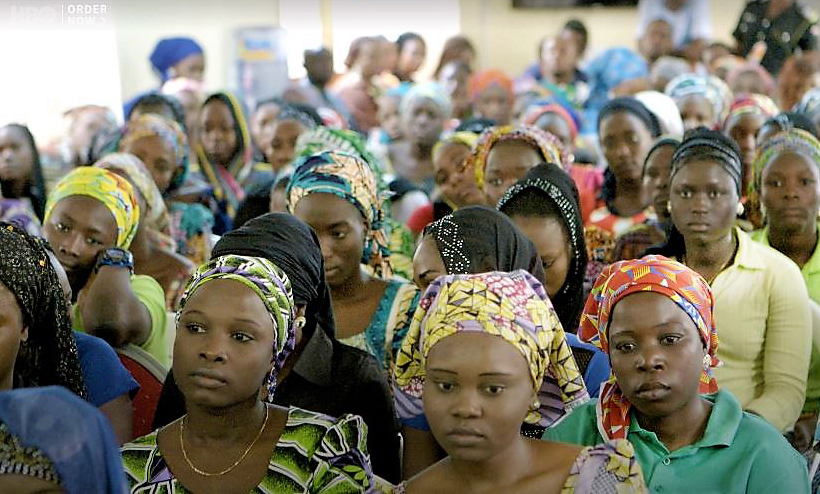 Chibok girls...the lucky ones who regained their freedom.