
16-11-2025
Thousands of young people marched in Mexico City on Saturday in a nationwide protest call on President Claudia Sheinbaum to end corruption and violence.
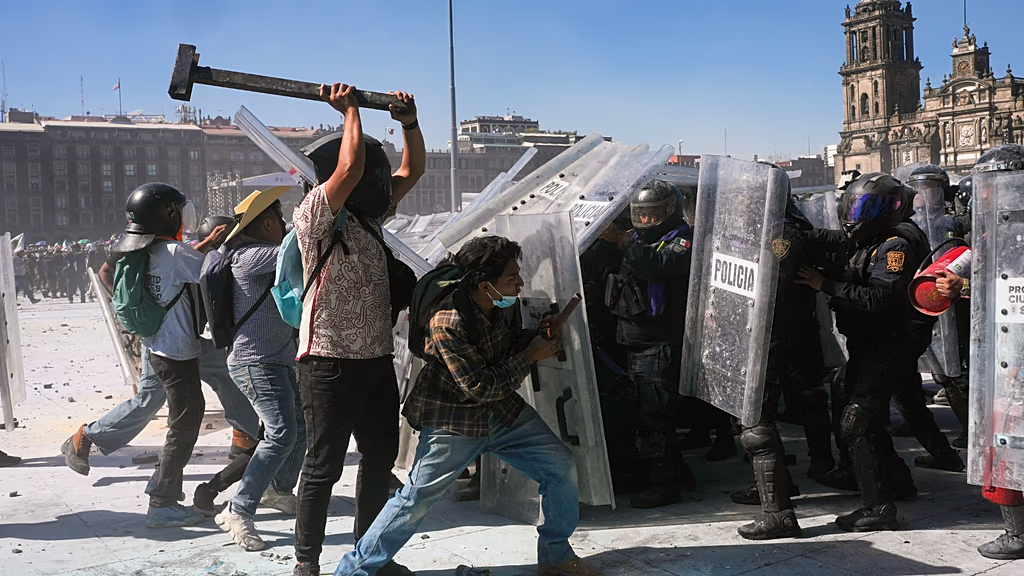
The demonstration ended with riots in the Zócalo: 20 civilians and more than 100 police officers were injured, and about 20 people were arrested.
The trigger for the movement in Mexico was the murder of the mayor of Uruapan, Carlos Manzo, on 1 November. The mayor had repeatedly called on the federal government to pay attention to the organised crime plaguing Michoacán, but his request was ignored. This crime became the catalyst for youth indignation against a system they consider corrupt, violent and deaf to citizens’ demands.
The demonstration brought together thousands of Mexicans of all ages: students, Villagers, members of opposition parties and citizens fed up with violence. According to the Secretary for Citizen Security of Mexico City, Pablo Vázquez, the march left 20 civilians and more than 100 police officers injured and around 20 people arrested after the clashes.
The march began peacefully, but when it reached the capital’s Zócalo, a group identified as the ‘black bloc’ broke through the demonstrators and began to hit the fences guarding the National Palace, the seat of the executive branch, with hammers and stones. The fences were knocked down, which provoked a direct confrontation with the capital’s police, who responded with tear gas and fire extinguishers.
Of the injured uniformed personnel, 60 received treatment on site, while 40 were transported to hospitals, four of whom required specialised care; none are in life-threatening condition. The 20 injured civilians were attended to by paramedics at the scene.
Those arrested were brought before the Public Prosecutor’s Office on charges of “violent acts,” while 20 others are being processed for administrative offences. Pablo Vázquez stated that authorities are working, in coordination with the Mexico City Attorney General’s Office, to identify all individuals who committed criminal acts during the demonstration.
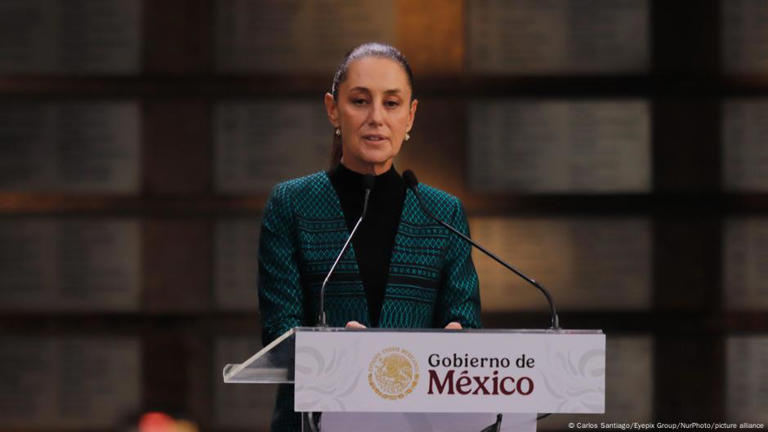
From Tabasco, President Sheinbaum called for the protests to continue “peacefully” and rejected violence: “Violence must never be used for change; always peacefully,” she said. However, she downplayed the importance of the movement, saying that “very few young people” marched, despite the thousands of people who gathered.
Generation Z in Mexico defines itself as a civic, realistic and non-partisan movement, born out of collective weariness. Its slogan makes it clear: “We are neither left-wing nor right-wing, we are the generation that is tired of bowing our heads”.
This movement is not unique to Mexico. Generation Z protests are a global phenomenon that has erupted in countries such as Nepal, Mongolia, Togo, Madagascar, Morocco, Paraguay, Peru, Bangladesh and Indonesia. Young people, digital natives with strong social responsibility, use platforms such as TikTok, Instagram and X to organise themselves, dispensing with traditional media dissemination.
The causes are many: people are unhappy with their governments, economic problems, falling living standards, corruption, and few opportunities. In some countries, like Nepal, protests have toppled governments. In Mexico, the movement is calling for a fundamental shift in the way the country is governed.