

30.1.2026
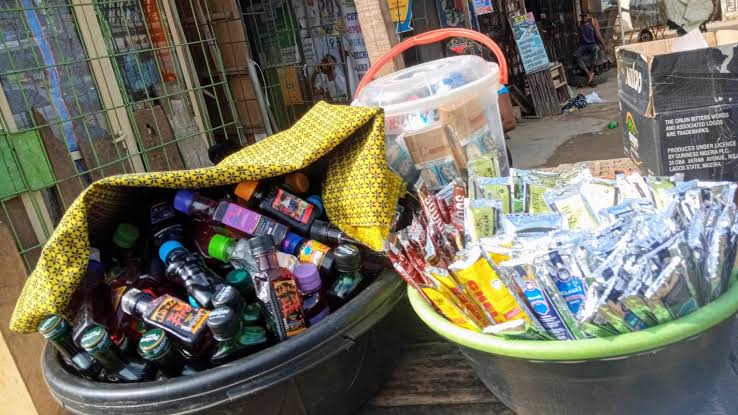
The Abuja Chamber of Commerce and Industry (ACCI) has warned that National Agency for Food and Drug Administration and Control’s renewed ban on sachet and small bottle alcoholic drinks threatens over five million jobs.
The chamber said that the ban also puts N800 billion investments at risk.
Emeka Obegolu, president of ACCI, said this while reacting to the ban on the production and sale of alcoholic beverages packaged in sachets and small bottles.
The reaction was contained in a statement issued by Olayemi John-Mensah, the ACCI media and strategy officer, on Friday in Abuja.
Mr Obegolu described the enforcement as economically disruptive and potentially damaging to investor’s confidence.
He said that at this time, Nigeria required regulatory stability to sustain growth, protect livelihoods, and attract investment.
The director-general of the NAFDAC, Mojisola Adeyeye, recently banned the products, warning that easy access to them is turning Nigerian children into addicts.
According to Mr Obegolu, while ACCI fully supports public health objectives, including the protection of minors and the promotion of responsible consumption, the current approach to enforcement is abrupt and raises concerns of regulatory inconsistency.
“The renewed enforcement contradicts existing government directives and legislative resolutions, including the directive issued by the Office of the Secretary to the Government of the Federation on December 15, 2025.
“The directive suspended the ban, as well as the resolution of the House of Representatives of March 14, 2024, calling for restraint and broader stakeholder consultation.”
He recalled that in December 2018, NAFDAC, Federal Ministry of Health and Social Welfare and Federal Competition and Consumer Protection Commission (FCCPC), entered into a five-year Memorandum of Understanding MoU with manufacturers on the issue.
He said that the MoU was to gradually phase out sachet and small-volume alcoholic beverages by January 31, 2024.
He said that the moratorium was later extended to December 2025 following sustained engagement with industry stakeholders.
“Despite these agreed transition timelines, the sudden enforcement has begun to disrupt legitimate businesses across the manufacturing, packaging, distribution, and retail value chains.
“The development has also unsettled existing investments and exposed millions of workers to potential job losses,” he said.
Mr Obegolu said that an outright ban, without adequate transition measures, may inadvertently encourage proliferation of illicit and unregulated alcohol products, thereby undermining both public health goals and government revenue. NAN