

6.2.2026
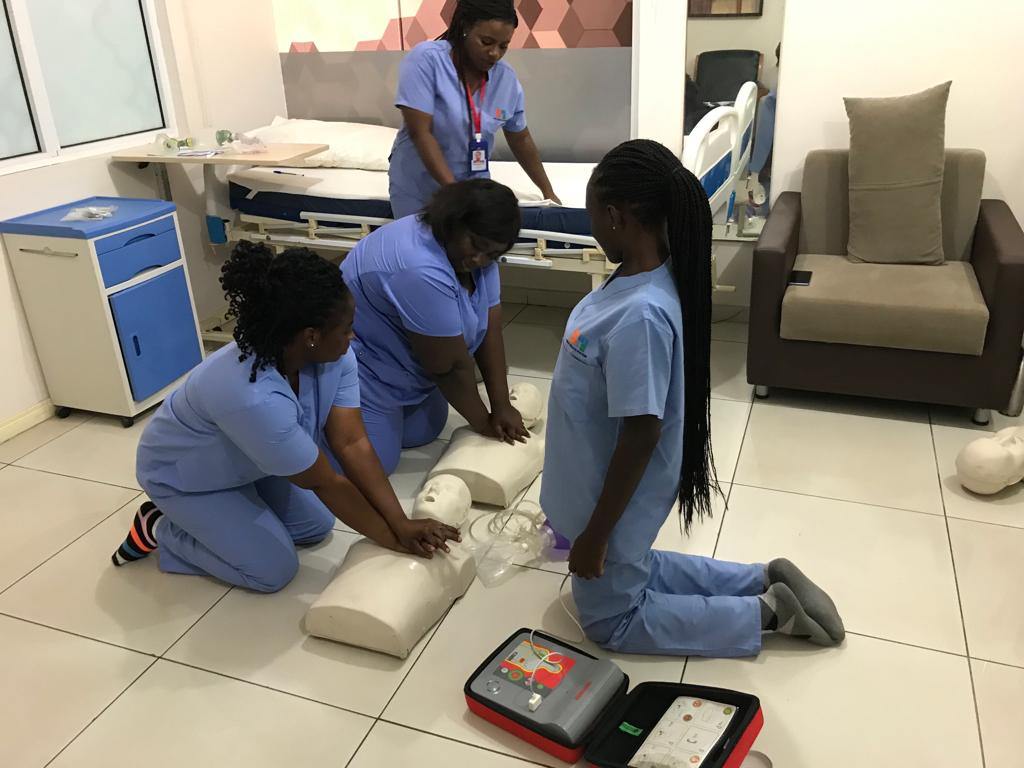
The federal government has begun cardiopulmonary resuscitation, basic life support, and automated external defibrillator training for its health ministry staff. This is in a bid to strengthen emergency response capacity to incidents such as cardiac arrest.
The exercise is supported by the Nigerian Cardiac Society and the Society for Public Health and Social Development.
Deputy health minister Iziaq Salako inaugurated the exercise on Thursday in Abuja. Mr Salako said that the initiative was part of the resolutions of the last National Council on Health.
Mr Salako said that the council recognised sudden cardiac arrest as a public health emergency, and emphasised the urgent need to build life-saving capacity beyond hospital walls.
He said that the initiative also aligned with the ministry’s commitment to preventive healthcare, occupational safety, and quality service delivery.
According to Mr Salako, the exercise will also be cascaded to communities nationwide to equip citizens with skills to recognise sudden cardiac arrest, initiate CPR promptly, and use an AED where available.
The minister expressed appreciation to NCS and other partners for their expertise, time, and resources in supporting the training aimed at advancing health outcomes and building a safer society.
Olanrewaju Olatunji, the deputy director of the Trauma Emergency Disaster Response Programme, Hospital Services Department at the ministry, noted the need for every individual to learn CPR, BLS, and AED to save lives.
According to Mr Olatunji, that is why it is important to commence CPR immediately. Mr Olatunji further said that slumping may be due to neurological, cardiovascular, or endocrine causes, as well as comorbid conditions such as hypertension, haemorrhaging, ischemic stroke, among others.
Augustine Odili, president of NCS, said that the council was developing training modules, standardisation and quality assurance measures, and certification processes to support CPR, BLS, and AED.
Mr Odili, who is also a Consultant Cardiologist at the University of Abuja Teaching Hospital, said that many Nigerians who have received CPR training have American Heart Association certification.
He attributed most causes of cardiac arrest to cardiovascular diseases that affect the heart, such as hypertension, diabetes, cigarette smoking, and a sedentary lifestyle, which are major risk factors. NAN